Designing AI-assisted authoring tools for workforce learning
Amplifire is a workforce learning platform built on decades of cognitive science research, helping organizations create more effective training experiences through adaptive learning.
As AI capabilities began entering mainstream software, Amplifire saw an opportunity to help subject matter experts and instructional designers create educational content more efficiently.
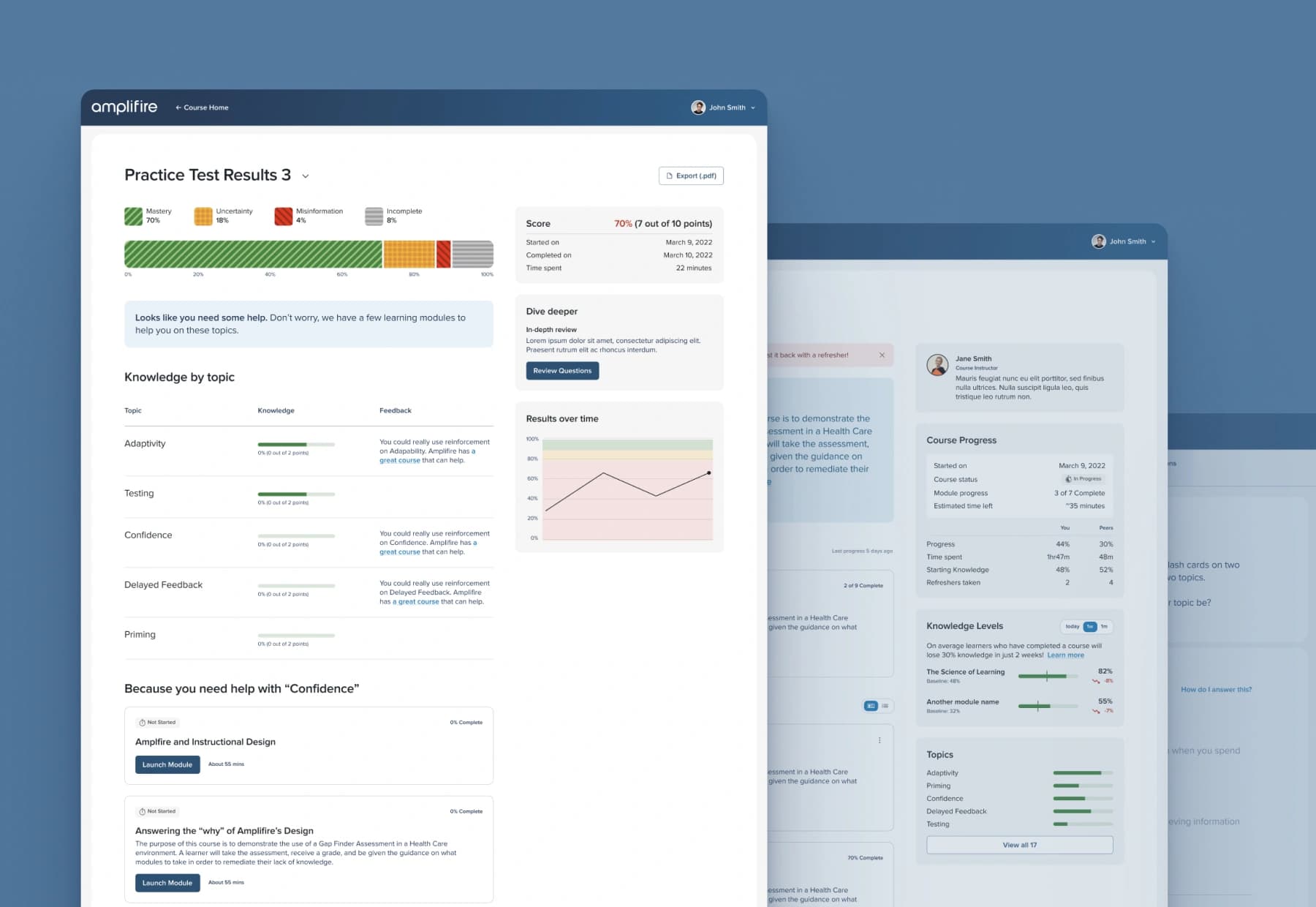
I worked across both the learner-facing experience and a new suite of AI-assisted authoring tools, exploring how AI could accelerate content creation while keeping educators in control of the final product.
- Role
- Product Designer
- Duration
- 5 months
- Team
- Team of 3
Challenge
Creating high-quality educational content is a time-intensive process.
Course authors often start with a combination of source materials, subject matter expertise, and organizational knowledge, then manually transform that information into structured courses, learning objectives, assessments, and supporting content.
AI could dramatically reduce that effort—but introducing generation into an educational workflow created a different problem: How do you make AI faster without making it less trustworthy?
Generated content needed to remain accurate, reviewable, and aligned with learning objectives. Authors also needed to understand what the AI had created and retain control over what ultimately reached learners.
Designing AI as a collaborator
Rather than designing AI as an autonomous content generator, I explored a model where AI worked alongside the author throughout the creation process.
The workflow allowed users to:
- Bring existing knowledge and source material into the experience
- Generate course structures and learning objectives
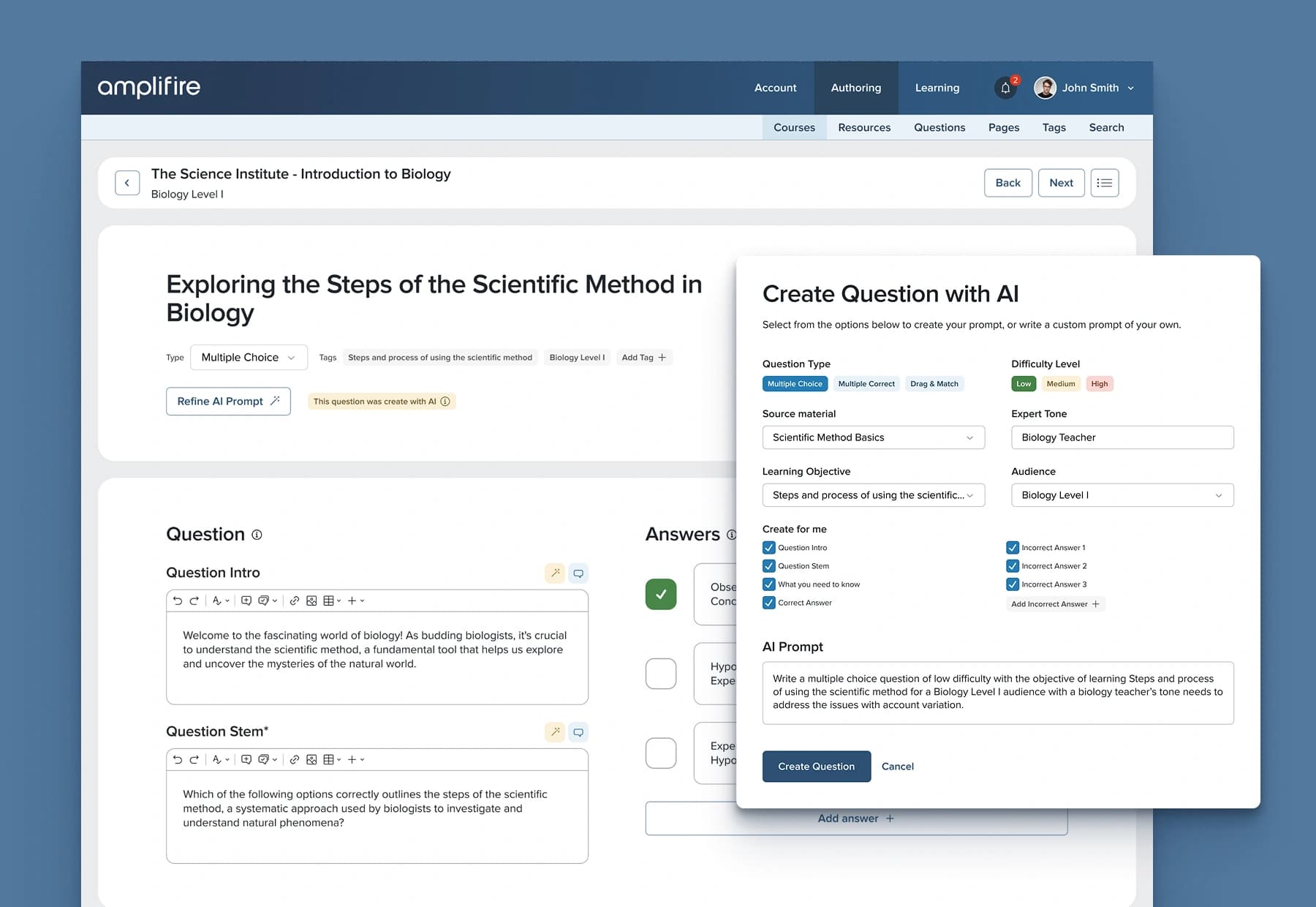
- Draft educational content and assessments
- Review and refine AI-generated material
- Approve content before it moved toward publication
This shifted the interaction from “generate something for me” toward “help me create and refine this.” That distinction became central to the experience.
Designing the authoring workflow
The experience connected several previously separate activities into a more continuous workflow:
Source material → course structure → content generation → review → refinement → publication
This meant thinking beyond individual AI interactions and designing the surrounding workflow—the context the AI needed, the decisions users needed to make, and the points where human judgment mattered most.
The result was an authoring experience where AI capabilities were integrated into the existing mental model of creating educational content rather than becoming a separate destination.
Outcome
The resulting experience gave course authors a way to accelerate content development while maintaining ownership of the educational process.
By combining AI-assisted generation with structured review and refinement, the product created a balance between speed, control, and confidence.
For me, the project also became an early exploration of principles that continue to shape my approach to AI product design: keeping people in control, making AI behavior understandable, and designing the workflow around human judgment rather than around the technology itself.
The impact: AI became part of the author's workflow—not a replacement for expertise, but a tool for turning knowledge into usable educational content more efficiently.