Turning complex organizational workflows into a working product
NextEra Energy needed a better way to connect project planning, cross-functional alignment, and executive reporting.
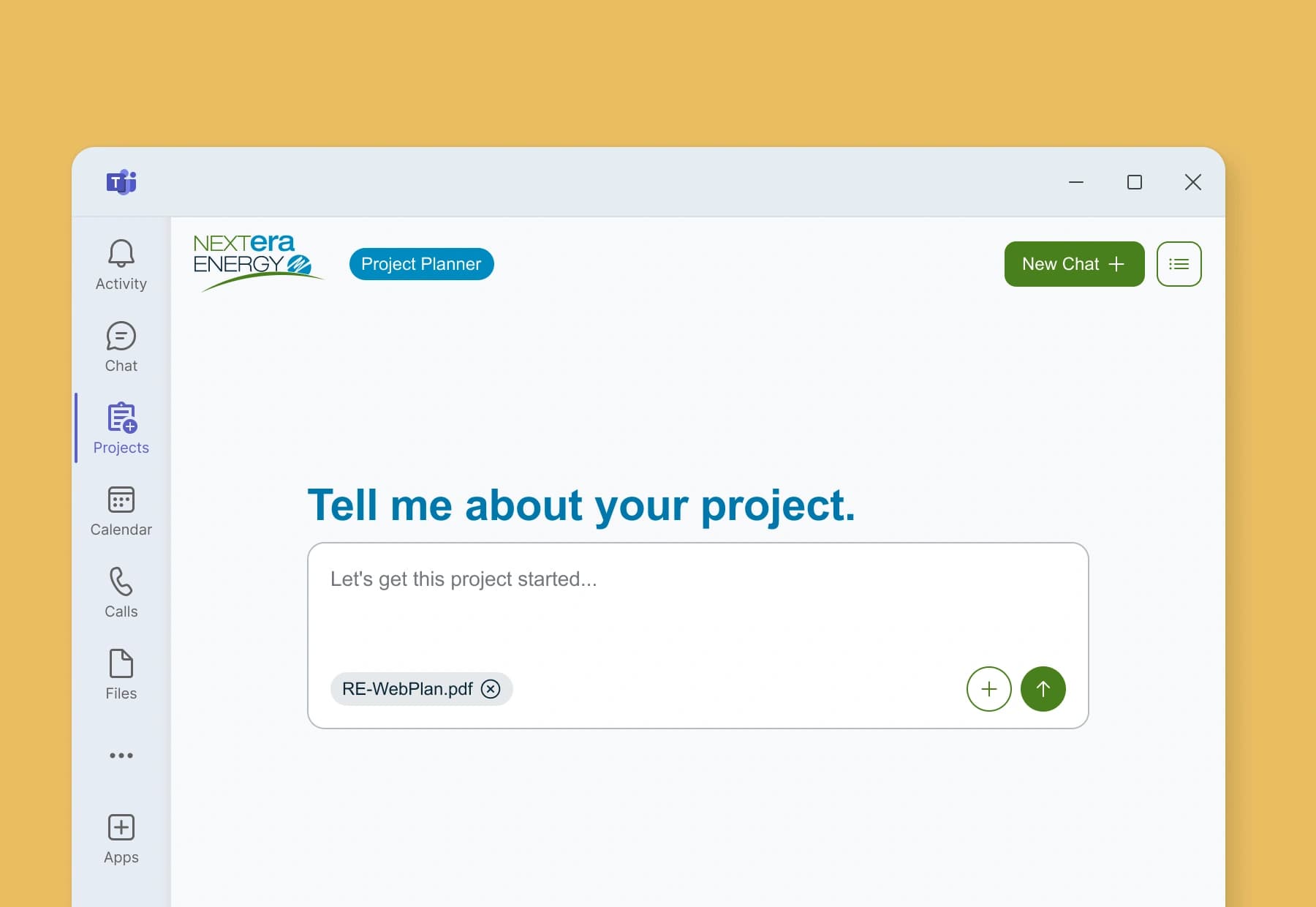
I led the product design and rapid prototyping effort for an internal platform that brought those workflows together—using research, AI-assisted prototyping, and design-to-code workflows to move from an ambiguous problem to a testable working product direction.
- Role
- Lead Product Designer
- Duration
- 4 months
- Team
- Team of 6
Challenge
Project information was distributed across teams, tools, and processes.
Each team had their own ways of planning and tracking work, while leadership needed a clearer view of priorities, dependencies, and progress. The result was a gap between how work was managed day-to-day and how that work needed to be understood at an organizational level.
The challenge was bigger than designing another project-management interface. We needed to understand: What common information needs to move between teams, and how can that information become useful at both the operational and executive level?
Starting with the existing workflows
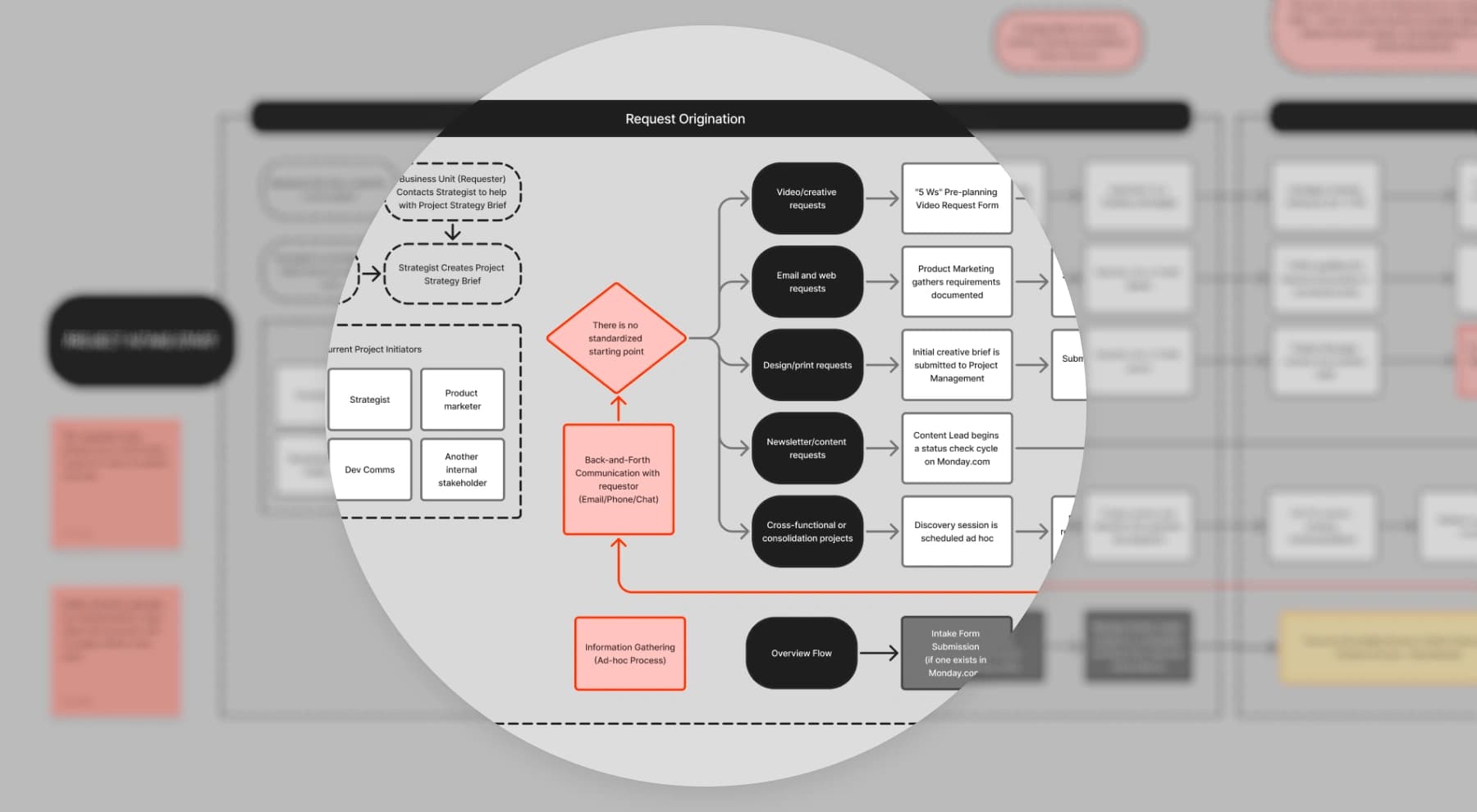
I began by researching and comparing how different departments currently created and managed projects. Rather than assuming there should be a single standardized process, I looked for the common structure underneath each team's workflow while identifying the needs that were specific to individual groups.
This helped define an information architecture that could support different teams without creating a one-size-fits-all process.
Designing the project intake workflow
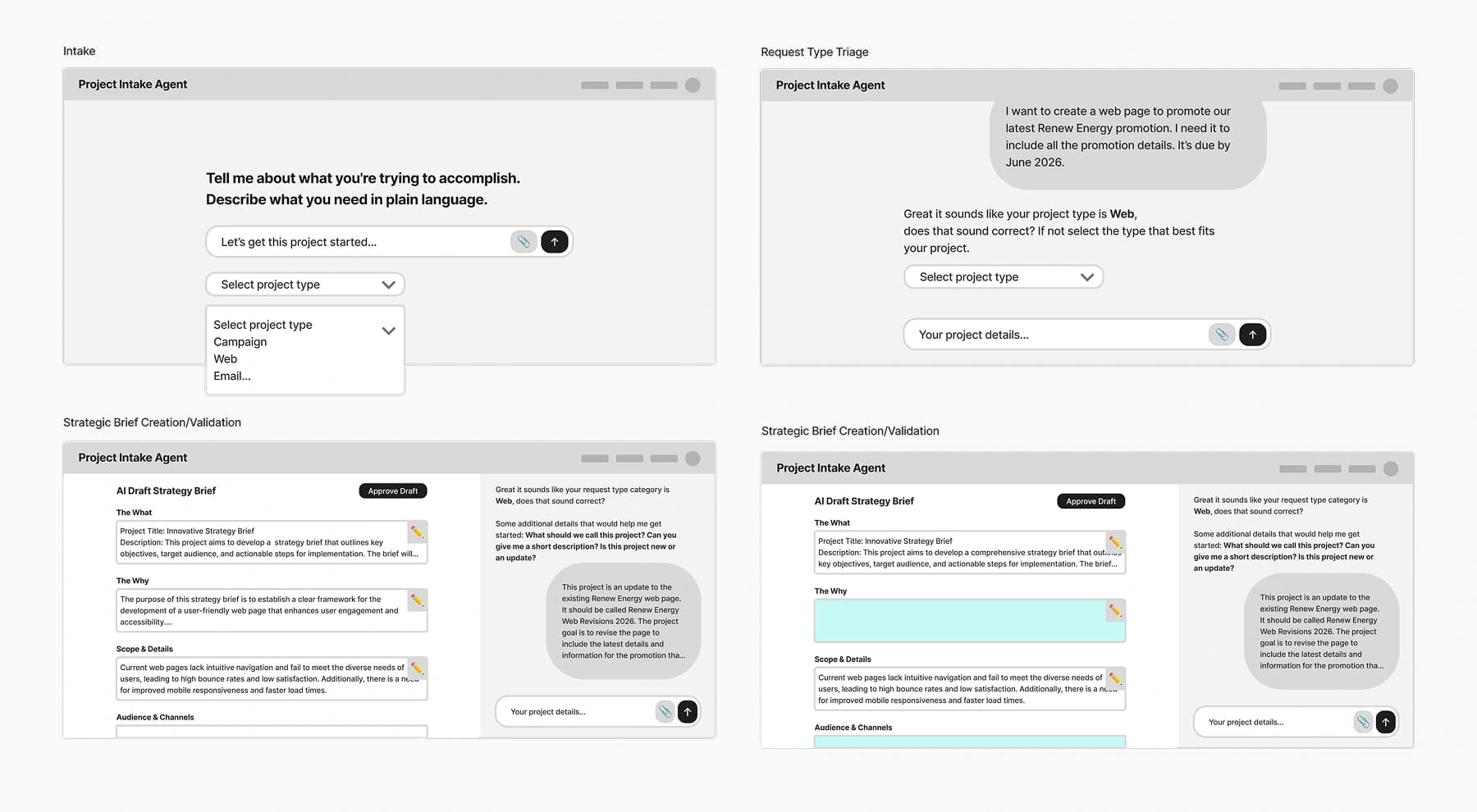
One of the key opportunities was improving how new projects entered the organization. I designed a workflow that guided users from initial project intake through triage and strategic brief creation, transforming loosely structured project information into something that could be reviewed, aligned, and acted upon.
The experience connected:
Project creation → intake → triage → strategic alignment → reporting
This created a shared structure without requiring teams to abandon the ways they already worked.
Rapid prototyping as a design tool
Because the problem involved complex organizational workflows, static wireframes weren't enough to evaluate the experience. I used AI-assisted design and prototyping workflows to quickly turn concepts into interactive experiences, allowing me to explore multiple approaches and validate interaction patterns with users and stakeholders.
This shortened the distance between an idea and something people could actually react to.
It also created a tighter feedback loop with engineering: instead of handing over static designs at the end of the process, the engineers were able to start building from the prototype code in parallel while we held user feedback sessions.
Outcome
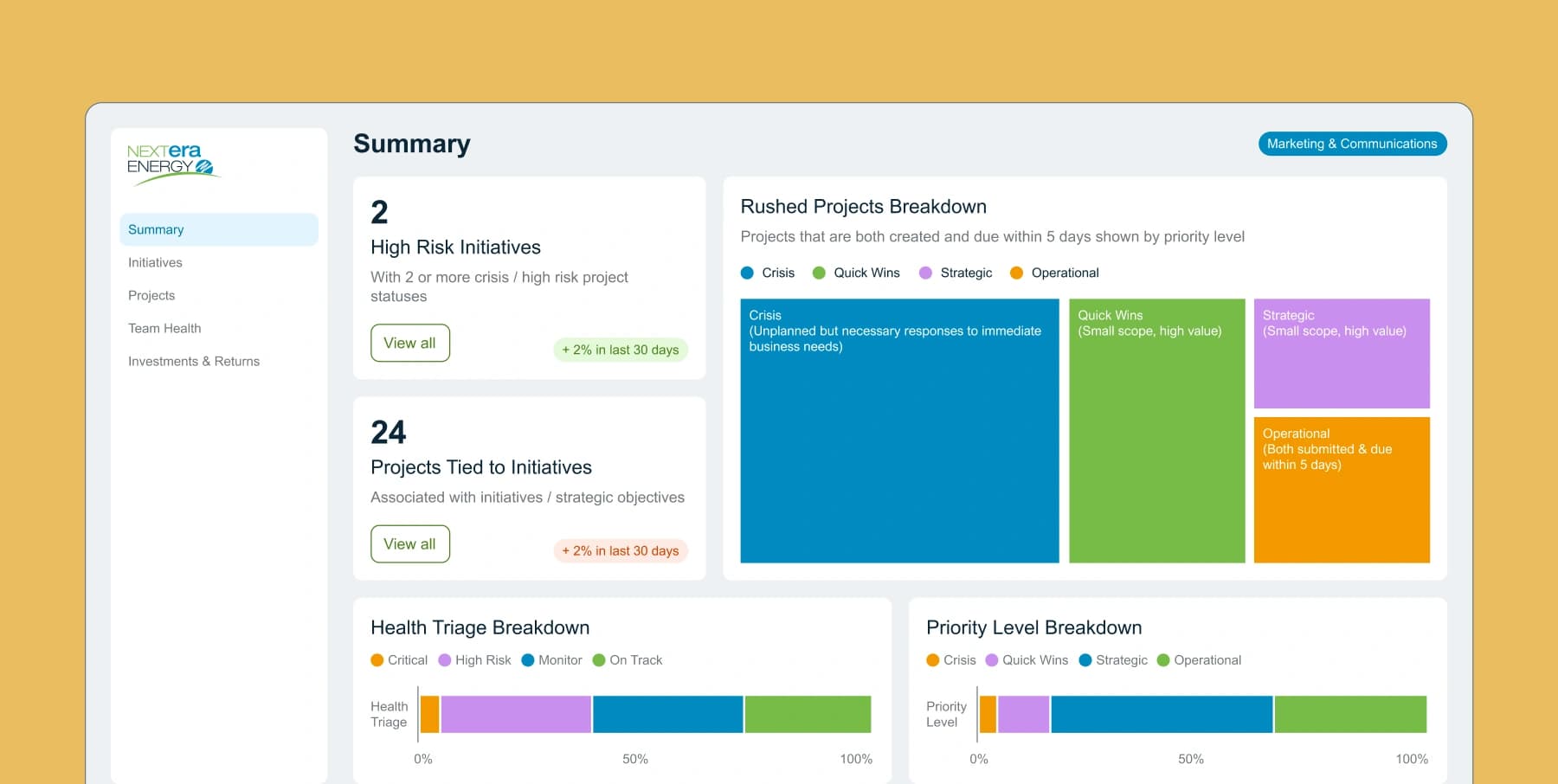
The resulting design established a more structured planning workflow while creating stronger connections between operational work and executive reporting. The experience brought project intake, team alignment, and leadership visibility into a connected system, and the prototype provided a concrete product direction could be iterated on by both the client and engineers.
The impact: a previously fragmented planning process became a structured workflow connecting project teams, shared initiatives, and executive reporting—delivered through a working Teams application and Power BI reporting experience.